
Before AI, Comes Process Intelligence: Why "Workarounds" Break Automation
"My team just figures it out" sounds like agility. But when 20% to 30% of daily tasks run on unwritten rules and side spreadsheets, AI has nothing consistent to run on.
Operational teardowns, algorithmic risk frameworks, and real-world deployment case studies curated specifically for CFOs and senior finance leaders.

Artificial Intelligence provides the computational engine, but Applied Intelligence produces real business outcomes through human context and judgment.
Artificial Intelligence provides the computational engine, but Applied Intelligence is created when algorithmic velocity is paired with human context, qualitative judgment, and strategic orchestration.
"My team just figures it out" sounds like agility. But when 20% to 30% of daily tasks run on unwritten rules and side spreadsheets, AI has nothing consistent to run on.
A decade-old system with a nominal subscription looks like a bargain — until you count the senior hours spent bridging its gaps in Excel. Total Cost of Ownership tells a very different story.
While enterprises burned millions chasing generative AI hype and ran into runaway token costs, SMBs have an unfair advantage: they can skip the trial-and-error phase entirely and build profitable, cost-controlled AI from Day 1.
When the CEO needs a same-day margin scenario before Monday's board meeting, most FP&A teams lose the weekend patching broken VLOOKUPs across three ERP systems. Here's what changes when a predictive AI model sits in the workflow instead.

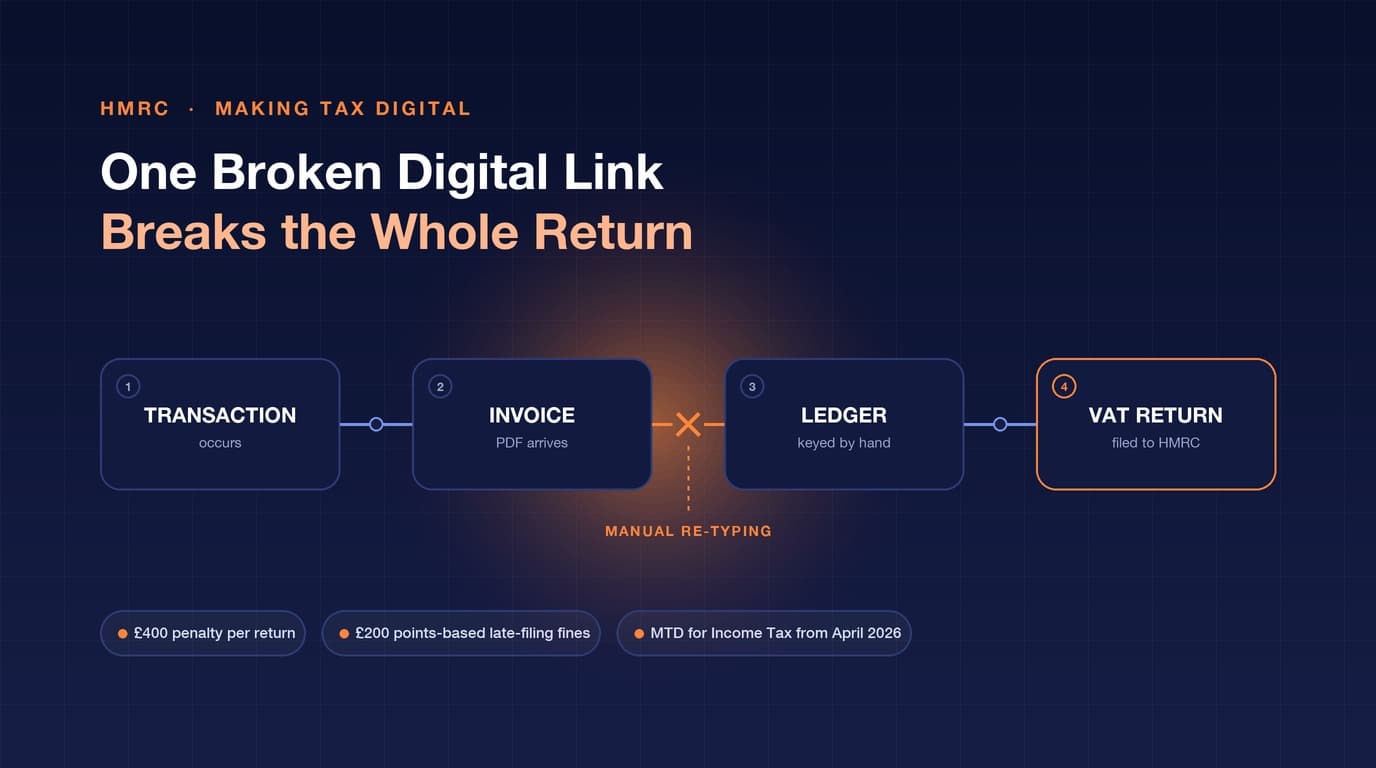
VAT MTD became mandatory in 2022 and most mid-size UK finance teams ticked the box. But MTD demands an unbroken digital link from transaction to return — and manual AP keying, side spreadsheets, and month-end Excel fixes break it every quarter.
Every week: 1 tactical workflow teardown, 1 algorithmic governance checklist, and zero vendor marketing.
No spam, no vendor pitches. Unsubscribe at any time with 1 click.