- 1A single ad hoc scenario request — "what happens to margins if supplier costs jump 8%?" — still triggers a full weekend of manual work at most finance teams.
- 2The real bottleneck isn't analytical skill, it's data assembly: reconciling three ERP systems, patching broken VLOOKUPs, and rebuilding static models by hand.
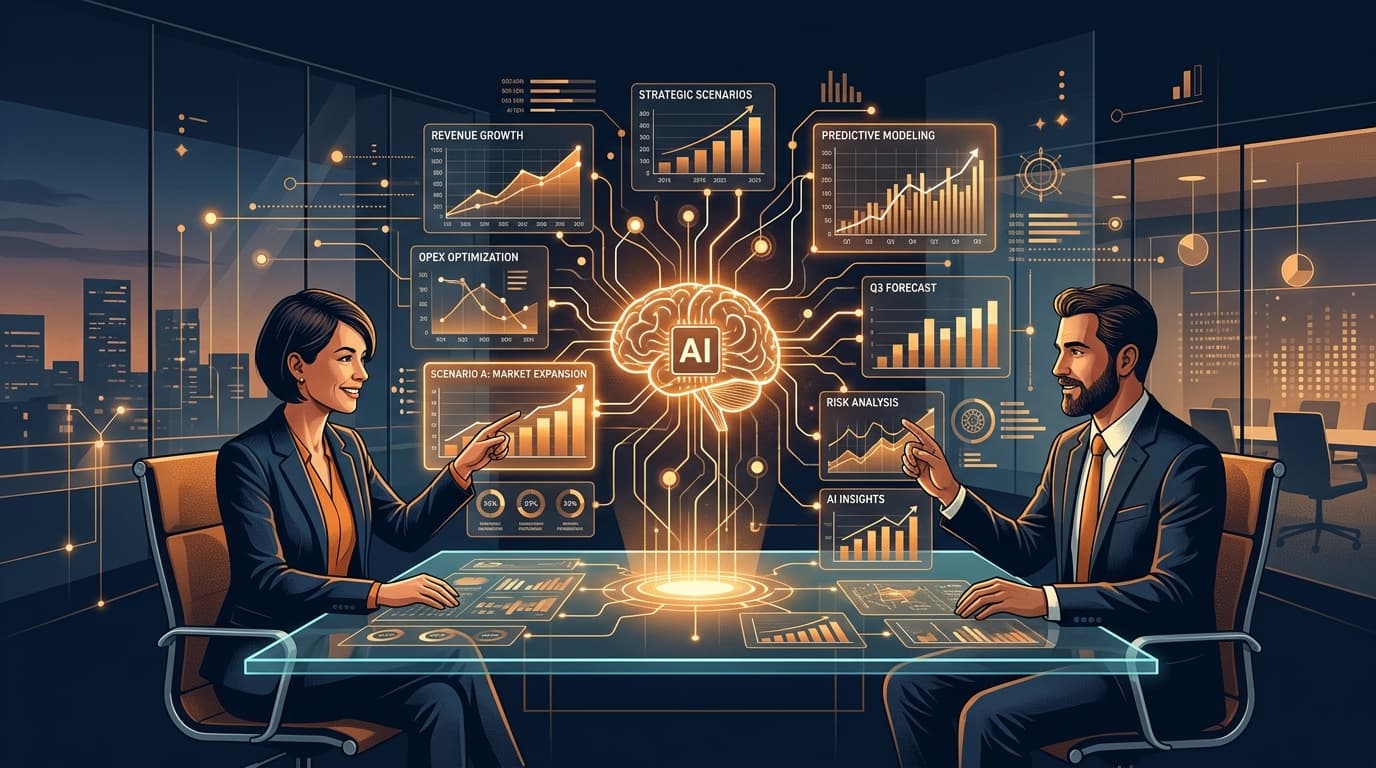
- 3An AI-powered predictive model replaces the scramble with real-time sensitivity analysis across historical pricing, macro trends, and demand data.
- 4The output becomes a probability-weighted range instead of a single best-guess number, with mitigation strategies ready before the CFO even has to ask twice.
- 5The real advantage isn't automation for its own sake — it's the shift from spreadsheet firefighting to real-time strategic co-piloting.
The Friday Fire Drill
It was 6:00 PM on a Friday when the CEO sent the email to the CFO: "If our core supplier costs jump 8% next month, what happens to our gross margins by Q4? Need this before Monday's board prep."
The CFO calls up the FP&A lead and asks him to get the team going on this request. Cue the quiet collective groan from the FP&A team.
What followed was a familiar weekend scramble:
- Pulling raw data from three different ERP systems.
- Hunting down broken VLOOKUPs across legacy sheets.
- Manually tweaking static models line by line.
The Cost of the Old Way
By Sunday night, the team delivered a static report based on best-guess assumptions. It wasn't wrong. But it was lagging, manual, and it exhausted the team.
The Same Request, Answered by 6:30 PM
Now imagine the same scenario with an AI-powered predictive model in place.
- Instant Scenario Modeling: Instead of rebuilding sheets, the team inputs the variable. The model runs real-time sensitivity analysis across historical vendor pricing, macro inflation trends, and demand forecasts.
- Fact-Based Probability: Instead of a single static number, the model generates probabilistic outcomes based on live operational data.
- Speed to Action: By 6:30 PM on Friday, the CFO replies with three data-backed mitigation strategies — already analyzed and ready for execution.
The Real Shift
The biggest benefit of AI in FP&A isn't just automation. It's the shift from being spreadsheet firefighters to real-time strategic co-pilots. When volatility hits, speed isn't just a convenience; it's a competitive advantage.
Where Does Your Team Spend Its Time?
Is your FP&A team currently spending more time assembling data or acting on insights? The gap between those two answers is exactly where AI-powered scenario modeling earns its keep.