
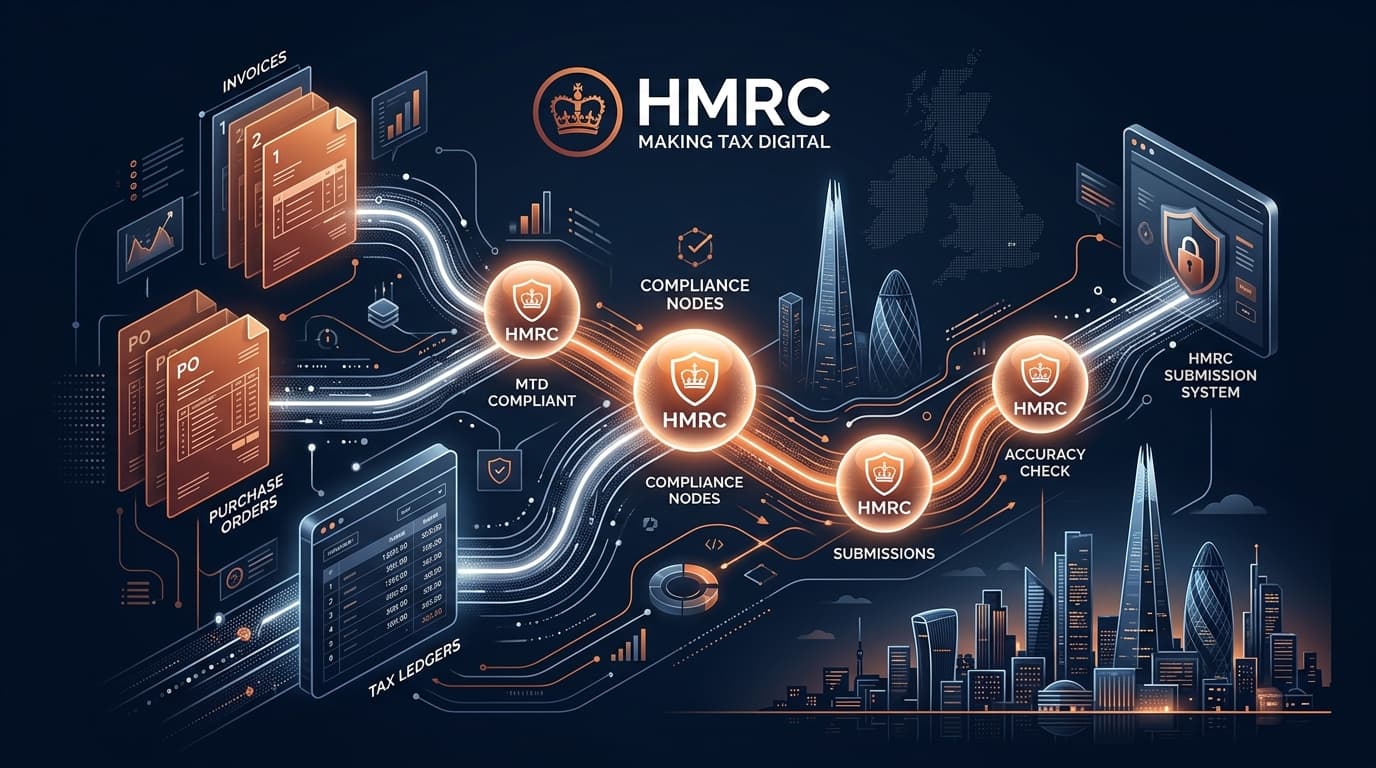
- 1Ticking the MTD box once in 2022 is not the same as maintaining unbroken digital links every quarter.
- 2A digital link prohibits human retyping: manual PDF entry and spreadsheet copy-paste are explicit breaches.
- 3HMRC enforcement carries penalties of up to £400 per return plus a points-based £200 recurring late-filing fine.
- 4Mid-size companies (100–300 staff) bear the highest operational burden with 1–2 generalist AP/AR staff.
- 5Automated invoice extraction, 3-way matching, and continuous vendor reconciliation close compliance gaps permanently.
The Requirement Nobody Explains Properly: The Unbroken Digital Link
Most finance leaders at mid-size UK companies think they've already dealt with Making Tax Digital. VAT MTD became mandatory back in 2022, the accounting software was switched on, and the box got ticked.
Here's the uncomfortable truth: ticking that box once isn't the same as staying compliant every quarter, forever.
MTD for VAT doesn't just ask you to use 'MTD-compatible software.' It requires an unbroken digital link from the moment a transaction happens to the moment it lands on your VAT return — no manual re-typing anywhere in the chain. A digital link can be an API call, a CSV import, even a linked spreadsheet cell. What it cannot be is a human retyping a total from one system into another.
That distinction sounds technical. It isn't. It's where almost every mid-size company quietly falls out of compliance.
Manual Process vs. Unbroken Digital Link
Why human retyping triggers HMRC compliance penalties and how Neoflo eliminates the gap.
Common Practices That Break Digital Links
• Purchase invoices arrive as PDFs and get keyed into the accounting system by hand. • Sales invoice VAT gets summarised on a side spreadsheet before being pasted into the return. • Vendor statements get reconciled at month-end with manual adjustments made directly in Excel.
HMRC Enforcement & The Expanding MTD Horizon
Every one of those practices is a broken digital link. And HMRC's enforcement isn't theoretical anymore — MTD-specific failures can draw penalties of up to £400 per return, on top of a points-based late-filing regime that adds £200 fines once you cross the threshold, and £200 again for every miss after that.
Layer MTD for Income Tax Self-Assessment (ITSA) on top — rolling out from April 2026 for sole traders and landlords above £50,000, dropping to £30,000 in 2027 — and the entire UK finance ecosystem your company operates in, including your own directors and any contractor relationships, is being pulled into continuous digital reporting.
VAT MTD was the warm-up. The direction of travel is unmistakable: HMRC wants real-time, always-clean financial data, not annual clean-up.
| MTD Milestone | Target Scope | Mandate Requirement |
|---|---|---|
| VAT MTD (2022) | All VAT-registered businesses | Unbroken digital links from intake to submission |
| ITSA Phase 1 (April 2026) | Sole traders & landlords > £50k | Quarterly digital updates & digital record-keeping |
| ITSA Phase 2 (April 2027) | Sole traders & landlords > £30k | Continuous digital tax accounting & software filing |
| Corporation Tax MTD | UK Corporate Entities (Future) | Real-time ledger audit trails and API reporting |
Why Mid-Size Companies Feel This the Hardest
Enterprises can throw a compliance team and a six-figure ERP integration at this problem. Micro-businesses and sole traders can get by on off-the-shelf bookkeeping software because their transaction volume is low.
Mid-size companies sit in the gap. Transaction volume is high enough that manual AP/AR processes genuinely break under MTD's digital-link requirement — but not high enough to justify a dedicated compliance hire or a bespoke systems overhaul.
Most run their AP/AR with one or two generalist staff who are already stretched across reconciliation, month-end close, and vendor queries. Asking them to also police digital-link integrity on every invoice, every quarter, indefinitely, isn't realistic.
The result: quiet, ongoing non-compliance that nobody notices until an HMRC review flags it.
The Mid-Market Dilemma
Mid-size finance teams are forced to balance high-volume transaction processing with zero margin for manual error, without the enterprise headcount to police digital link logs.
Where Neoflo Fits: Operations-as-a-Service
This is an operations problem, not a software problem — and it's exactly what we built Neoflo to solve:
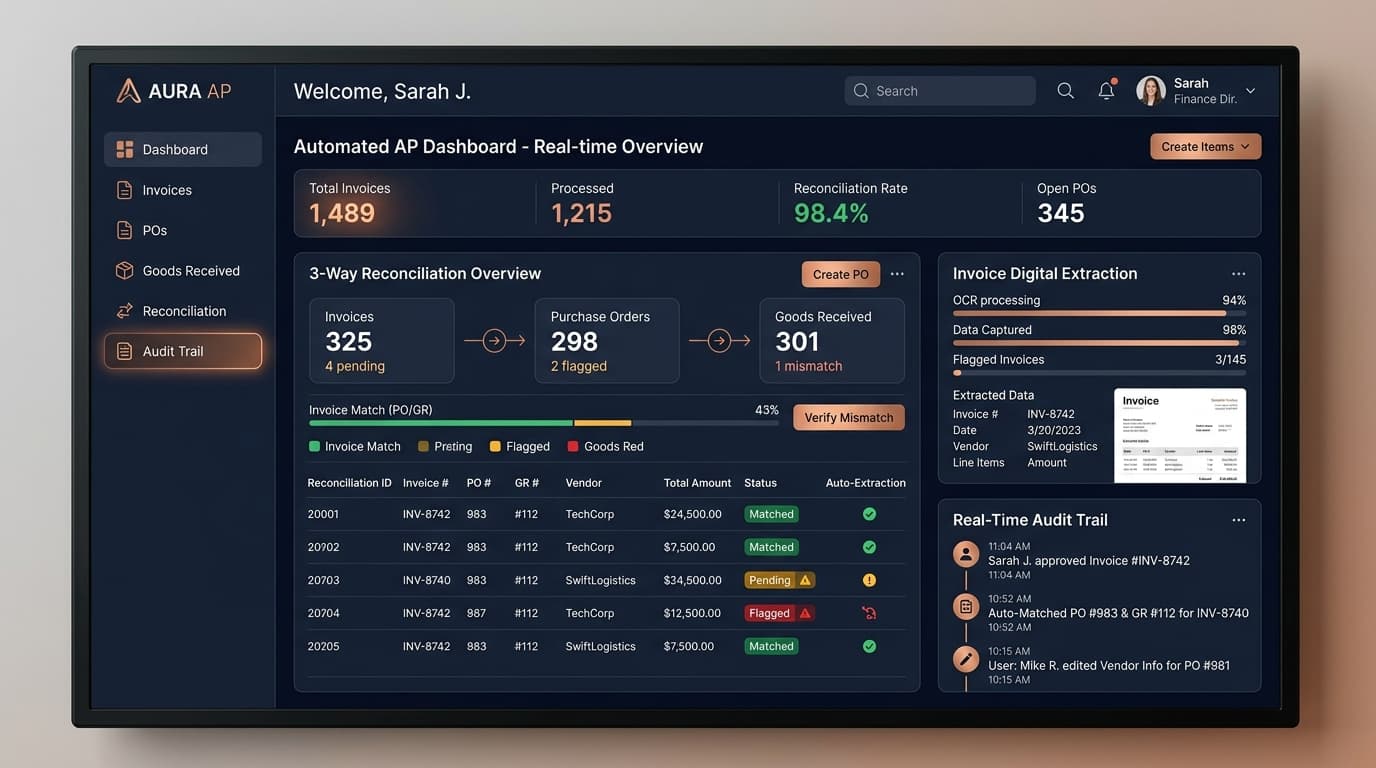
Walkthrough: Automated 3-Way Matching & MTD Audit Lineage
Watch how Neoflo automatically digitizes incoming PDF invoices, conducts 3-way reconciliation against purchase orders, and preserves digital links straight to your ledger.
- Invoice extraction, at intake: Purchase and sales invoices are digitised the moment they arrive, so VAT data enters your system as a machine-read field — never a manually retyped total. This closes the single most common digital-link breach before it happens.
- Three-way matching, automated: Purchase order, invoice, and goods-received data stay linked and auditable throughout, removing the ad hoc, spreadsheet-patched reconciliation that trips up so many MTD reviews.
- Vendor reconciliation, continuous: No more 'fix it in Excel at month-end' — the habit that quietly severs digital links more than any other single practice.
- Clean data, every quarter: Your VAT return gets built from records that were accurate all quarter long, not assembled under deadline pressure in the final week.
"We don't sell you another piece of software to add to the stack. We run your AP/AR execution on an SLA basis, at a fraction of the cost of an additional in-house hire, so your existing finance team can focus on judgement calls instead of data entry — and your digital links never break in the first place."
Implementation Action Checklist
The Real Question for Mid-Size Finance Leaders
It isn't 'are we MTD compliant today.' It's 'will we still be compliant next quarter, and the one after that, without anyone in my team burning hours policing it manually.' If the honest answer is uncertain, that's the gap worth closing before HMRC closes it for you.